
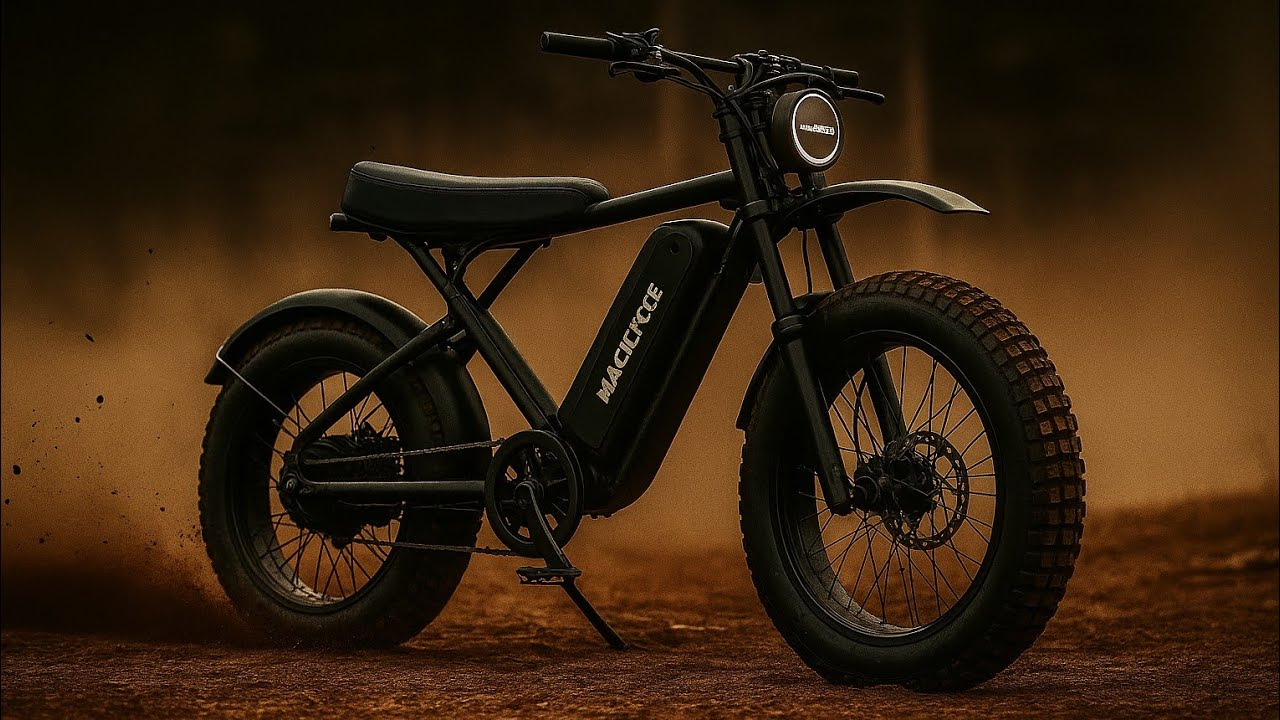
Battery capacity is one of the most important factors when choosing an electric bicycle. While motor power and tire design influence riding performance, battery size determines how much energy is available for each journey. For people who regularly commute, enjoy recreational cycling, or travel across mixed terrain, having additional battery capacity can make everyday riding more convenient.
However, not every electric bicycle buyer needs an expensive dual-battery configuration. Sometimes, choosing a model with a larger single battery can provide a practical balance between riding range, cost, and everyday usability.
The YVY K20 25Ah is an interesting option for riders who want more battery capacity than the standard 20Ah K20 configuration. It combines a 1500W brushless motor, a removable 48V 25Ah battery, 20-inch fat tires, hydraulic disc brakes, and suspension components. Its main attraction is the larger battery, which provides additional stored energy for riders who want more flexibility when planning longer journeys.
What Is the YVY K20 25Ah Electric Bike?
The YVY K20 25Ah is a larger-battery configuration within the K20 electric bicycle range. Although it shares the K20 model name, its battery capacity distinguishes it from the standard 48V 20Ah version.
The bicycle is designed to support commuting, recreational cycling, and mixed-terrain riding. Its combination of a powerful hub motor, wide tires, and suspension makes it worth considering for people who want an electric bicycle for different riding environments.
According to the official product listing, its main specifications include:
- Motor: 1500W brushless hub motor.
- Maximum torque: 80Nm.
- Battery: Removable 48V 25Ah lithium-ion battery.
- Battery energy: Approximately 1,200Wh.
- Tires: 20-inch by 4.0-inch fat tires.
- Brakes: Front and rear hydraulic disc brakes with EABS.
- Suspension: Five-level front fork and rear seatpost shock.
- Drivetrain: Seven-speed transmission.
- Maximum load capacity: 330 lbs.
- Recommended rider height: Approximately 5’2″–6’2″.
- Charging time: Approximately 6–8 hours.
These specifications position the 25Ah version as an option for buyers who prioritize additional battery capacity without moving to a dual-battery configuration.
Why Choose a 48V 25Ah Electric Bike?
Battery capacity can influence how frequently an electric bicycle needs to be charged. A larger battery stores more energy, potentially allowing riders to travel farther under comparable conditions.
The YVY K20 48V 25Ah configuration provides approximately 1,200Wh of nominal battery energy.
The calculation is simple:
48V × 25Ah = 1,200Wh.
This is 25% more nominal energy than a 48V 20Ah battery, which provides approximately 960Wh.
For everyday riders, this difference can be useful. Additional battery capacity provides more flexibility when planning longer journeys, using higher pedal-assist settings, or traveling across routes that require more motor assistance.
Some potential benefits include:
- More stored energy for extended rides.
- Greater flexibility when selecting pedal-assist levels.
- Less frequent charging under comparable riding conditions.
- Additional energy capacity for longer recreational trips.
- More flexibility for riders who regularly encounter challenging terrain.
However, a larger battery does not automatically guarantee a specific riding distance. Actual range depends on energy consumption, riding habits, terrain, rider weight, and environmental conditions.
How Much Riding Range Does the YVY K20 25Ah Offer?
Range is often one of the first things buyers check when comparing electric bicycles.
According to the manufacturer’s official product listing, the YVY K20 25Ah offers:
- 100+ miles in pedal-assist level 1.
- Approximately 30–50 miles in throttle-only mode.
These are manufacturer-advertised estimates based on a 165 lb rider on mixed pavement. They should not be treated as guaranteed everyday riding distances.
Actual range can change depending on several factors.
Rider weight: Heavier loads generally require more energy from the motor.
Terrain: Climbing hills and traveling over loose surfaces can increase battery consumption.
Riding speed: Higher speeds can increase energy use because of greater rolling and aerodynamic resistance.
Pedal-assist settings: Higher assistance levels generally consume more battery energy.
Weather conditions: Temperature and wind can influence battery performance and overall energy consumption.
Tire pressure: Incorrect tire pressure can increase rolling resistance and reduce efficiency.
For someone planning a daily commute, it is better to estimate the energy required for their regular journey than to rely on the maximum advertised range.
The manufacturer lists a charging time of approximately 6–8 hours. This can be useful for riders who prefer to recharge the battery overnight or during longer breaks.
YVY K20 25Ah vs Standard K20 20Ah: What Is the Difference?
One important consideration when comparing models in the K20 range is understanding the battery configurations.
The standard K20 and the 25Ah version share the same general model family, but they offer different battery capacities.
| Feature | Standard K20 | K20 25Ah |
| Battery voltage | 48V | 48V |
| Battery capacity | 20Ah | 25Ah |
| Nominal energy | 960Wh | 1,200Wh |
| Energy difference | Reference | 25% more |
| Configuration | Single battery | Single battery |
| Main advantage | Standard capacity | Larger battery reserve |
The main difference is battery capacity rather than an entirely different bicycle category.
For riders whose journeys are relatively short, the standard 20Ah configuration may already provide sufficient capacity. However, people who regularly travel longer distances or prefer additional battery reserve may appreciate the 25Ah version.
The larger battery can also provide more flexibility when using higher assistance settings, although the actual range advantage will depend on riding conditions.
How Does the K20 25Ah Compare with the K20 Pro?
The K20 25Ah should also be distinguished from the YVY K20 Pro.
Although both models belong to the same broader product family, they are different configurations.
The K20 25Ah uses a single 48V 25Ah battery, providing approximately 1,200Wh of nominal energy.
The K20 Pro is advertised with a dual-motor and dual-battery configuration featuring two 52V 20Ah batteries. Together, these provide approximately 2,080Wh of nominal energy.
This means the K20 Pro has a substantially larger advertised battery-energy capacity and a different motor configuration.
The choice depends on individual requirements:
- Standard K20 20Ah: Suitable for buyers who want the standard battery configuration.
- K20 25Ah: Worth considering for riders who want additional battery capacity in a single-battery setup.
- K20 Pro: Designed for buyers interested in a dual-motor and dual-battery configuration with substantially greater stored energy.
It is important not to confuse the K20 25Ah with the K20 Pro simply because both offer more battery capacity than the standard K20.
Motor Performance for Commuting and Mixed Terrain
Battery capacity is only one part of electric bicycle performance. Motor specifications also matter, particularly when traveling across hills, gravel, and uneven roads.
The YVY K20 25Ah features a 1500W brushless hub motor with up to 80Nm of torque, according to the manufacturer.
The motor is designed to provide electric assistance during acceleration and climbing. Additional torque can be useful when riding on inclines or carrying heavier loads.
The bicycle also supports different riding modes, including throttle-powered riding and pedal assistance.
For daily commuting, this flexibility allows riders to adjust their level of physical effort. For recreational trips, pedal assistance can help reduce fatigue during longer journeys.
Buyers should distinguish peak motor output from continuous rated power and verify the applicable motor classification before purchasing.
The advertised motor performance and speed must also be considered in relation to local electric-bike regulations.
20-Inch Fat Tires and Suspension for Riding Comfort
The YVY K20 25Ah uses 20-inch by 4.0-inch fat tires.
Wide tires can provide additional traction on different surfaces because of their larger contact area. Depending on pressure, tread design, and road conditions, they may help improve stability on gravel, sand, grass, and uneven pavement.
This makes the bicycle potentially useful for:
- Urban commuting.
- Neighborhood roads.
- Gravel paths.
- Dirt trails.
- Sandy surfaces.
- Selected recreational routes.
The bicycle also includes a five-level front suspension fork and a rear seatpost shock absorber.
The suspension system is intended to reduce the impact of uneven surfaces and improve riding comfort.
For commuters who regularly encounter potholes or damaged roads, these components may help make journeys more comfortable.
However, fat tires and suspension do not eliminate the need for careful riding. Riders should maintain appropriate tire pressure and adjust their speed according to road conditions.
Hydraulic Disc Brakes and Safety Features
A reliable braking system is essential when choosing an electric bicycle.
The YVY K20 25Ah features front and rear hydraulic disc brakes with EABS, according to the official product listing.
Hydraulic brakes use fluid pressure to transfer force from the brake lever to the braking mechanism. They can provide smooth lever operation and consistent braking performance when properly maintained.
The product listing describes EABS as an additional feature intended to assist braking and reduce brake-pad wear during longer rides.
For people traveling on hilly routes or carrying additional loads, dependable braking performance is particularly important.
Riders should regularly inspect brake pads, rotors, and hydraulic components. Proper maintenance is necessary to maintain braking performance over time.
Additional Features for Everyday Riding
Beyond the larger battery, the YVY K20 25Ah includes several features intended to support everyday use.
Seven-speed drivetrain: The transmission allows riders to adjust their pedaling effort for different road conditions.
LCD display: Provides useful riding information, including speed, battery status, and other trip-related details.
LED lighting: Front and rear lights improve visibility during low-light conditions.
Front and rear fenders: Help reduce water and dirt splashing onto the rider.
Removable battery: Provides flexibility when charging the bicycle.
Pre-assembly: The manufacturer states that the bicycle arrives approximately 90% pre-assembled, with a charger, tool kit, pedals, and instruction manual.
The manufacturer also lists a maximum load capacity of 330 lbs and a recommended rider height range of approximately 5’2″–6’2″.
These specifications should be reviewed alongside the actual bicycle dimensions to determine whether the model is suitable for an individual rider.
Who Should Consider the YVY K20 25Ah?
The YVY K20 25Ah may be particularly interesting for people who want additional battery capacity without choosing a dual-battery electric bicycle.
Longer-distance commuters: Riders with longer daily routes may appreciate the larger battery reserve.
Recreational cyclists: People who enjoy weekend rides may benefit from having more stored energy for extended trips.
Mixed-terrain riders: The fat tires and suspension system may be useful for exploring different surfaces.
Battery-conscious buyers: People comparing 20Ah and 25Ah configurations may prefer the additional 25% nominal battery energy.
K20 series shoppers: Buyers who like the standard K20 design but want more battery capacity can consider this separate configuration.
However, the larger battery may not provide meaningful additional value for someone whose regular journeys are short and who has convenient charging access.
What Should You Check Before Purchasing?
Before ordering the YVY K20 25Ah, consider the following:
- Battery configuration: Confirm that the selected product includes the 48V 25Ah battery.
- Riding range: Treat advertised range as an estimate rather than a guaranteed result.
- Motor specifications: Check peak and continuous motor ratings.
- Rider compatibility: Review the recommended height and maximum load capacity.
- Charging requirements: Confirm the charging time and battery-removal process.
- Braking maintenance: Understand the requirements of the hydraulic braking system.
- Warranty coverage: Review the latest warranty terms for the motor, battery, and charger.
- Delivery and availability: Confirm shipping conditions, return policies, and regional availability.
- Local regulations: Check motor-power and speed restrictions before using the bicycle on public roads.
The manufacturer lists 12-month coverage for the motor, battery, and charger, along with US-based support. Confirm the applicable terms for your purchase location before ordering.
Final Verdict: Is the YVY K20 25Ah Worth Considering?
The YVY K20 25Ah is an interesting option for buyers who want more battery capacity than the standard K20 20Ah configuration.
Its 1500W brushless motor, removable 48V 25Ah battery, 20-inch fat tires, hydraulic disc brakes, and suspension system create a practical combination for commuting and recreational riding.
Its biggest advantage is the additional battery energy. With approximately 1,200Wh of nominal capacity, it provides 25% more stored energy than the standard 48V 20Ah K20 configuration.
At the same time, it remains distinct from the K20 Pro, which offers a dual-motor and dual-battery setup with substantially greater nominal battery capacity.
Ultimately, the K20 25Ah may be worth considering if you want a larger single-battery configuration without moving to the more extensive K20 Pro setup.
The best choice depends on your regular travel distance, riding conditions, budget, and charging requirements. Reviewing the latest specifications and purchase conditions on the official product page will help you decide whether this battery configuration matches your needs.